
Understand the stone. Find your sparkle.
Origin, cut and laboratory reports: the essentials before choosing your jewellery.
International gemological laboratories
International gemological laboratories
An independent gemological report describes a specific stone. It does not establish the price of a piece of jewellery or replace inspection of the item.

GIA
GIA — Gemological Institute of America, creator of the 4Cs system. Since 1 October 2025, its new assessment for D–Z laboratory-grown diamonds uses Premium and Standard categories, separate from natural-diamond grading. Older reports may use a different format.
Official resourceIGI
IGI — International Gemological Institute. Identifies diamond origin and issues reports for natural and laboratory-grown stones. Depending on the report type, it includes 4Cs, measurements, growth and treatment information.
Official resourceHRD Antwerp
HRD Antwerp — a gemological laboratory in Antwerp. AWDC announced that, from 2026, HRD would no longer issue new quality certificates for loose laboratory-grown diamonds intended for commercial use. Certification of jewellery containing such stones remains available. For previously issued reports, check the document type, date, number and stone characteristics.
Official resourceKnowledge for a confident choice
The 4Cs: understanding diamond beauty
Carat measures weight. One carat equals 0.2 grams. Weight does not determine diameter: equally heavy stones can have different measurements because of their shape and proportions.
Cut quality concerns proportions, polish and symmetry and their effect on light. Color describes colour; clarity describes inclusions and surface characteristics. Clarity grading uses 10× magnification.
Compare the full set of characteristics. Greater weight alone does not guarantee more sparkle. Look at millimetre measurements and appearance in ordinary lighting.
Article source · GIALab-grown diamonds: real or imitation?
A laboratory-grown diamond is a diamond, not cubic zirconia or moissanite. It is grown from carbon in controlled conditions. Origin distinguishes it from a natural diamond; reliable identification requires specialist equipment.
HPHT uses high pressure and temperature; CVD deposits carbon from a gas phase. The growth method is not a quality grade. Choose by the individual stone’s characteristics and appearance.
Laboratory origin alone does not establish sustainability. Such claims need producer information, energy data and independent verification.
Article source · IGIHow to read and verify a report
A report identifies origin, shape, weight, dimensions and a report number. Its grading fields vary with the laboratory, report type and issue date. Read treatment information carefully.
Enter the number on the laboratory’s official resource and compare the online record with the document and stone. Ask a jeweller to show any laser girdle inscription under magnification.
A matching database entry does not prove that the presented stone is that diamond. A report photograph or QR code cannot replace a physical comparison.
Article source · IGIShape and cut: understanding the difference
Shape describes the outline: round, oval, pear, emerald or another shape. Cut quality describes how well proportions and facets are executed. These are different concepts.
Round offers a classic outline; oval and pear offer elongated silhouettes. Emerald cuts have step facets and broad reflections. Compare shapes on the hand and by their actual measurements.
A single cut grade should not be applied indiscriminately across shapes. For fancy shapes, examine videos, symmetry and the balance of bright and dark areas.
Article source · GIAKeeping your jewellery sparkling
Hardness does not make diamonds immune to chipping. Avoid strong impacts, particularly on pointed corners. Store pieces separately so they do not scratch each other.
Use a gentle non-abrasive cleaner and a lint-free cloth. Cleaning must also suit the metal, coatings and other gemstones in the piece.
Leave ultrasonic and steam cleaning to a professional after the setting is checked. Stop wearing jewellery with a loose stone or damaged prong and consult a jeweller.
Article source · GIAHow a laboratory-grown diamond begins
Three visual introductions to growth, crystals and treatment.
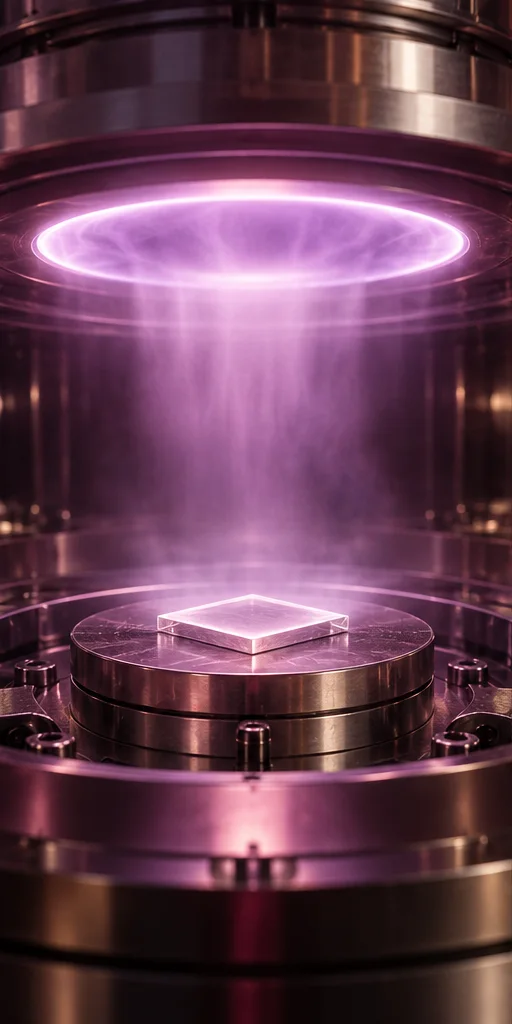
CVD: how a diamond grows from gas
From a thin seed to a crystal: an introduction to chemical vapour deposition.
In a CVD chamber, carbon from a gas mixture is deposited onto a diamond seed. Controlled conditions allow the crystal to grow gradually.
Explore the article →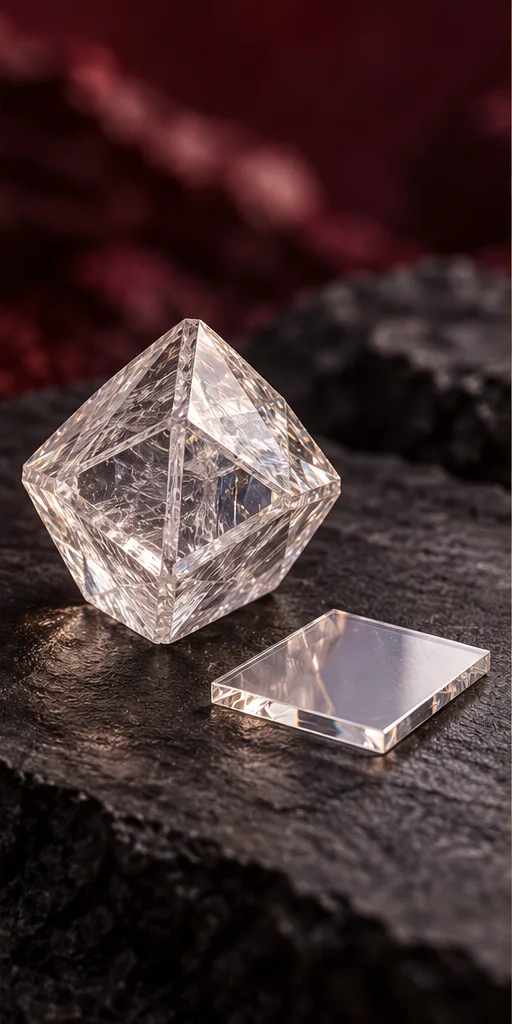
HPHT: pressure and temperature behind a diamond
What the method’s name means, and why it is not a stone-quality grade.
HPHT stands for High Pressure, High Temperature. The method uses these conditions to grow a diamond crystal.
Explore the article →Post-growth treatment: what to know
Why origin and treatment are different characteristics of a lab-grown diamond.
Some CVD stones undergo post-growth HPHT treatment to change their colour. This is a separate stage, not a second growth method for the same stone.
Explore the article →